When I first moved to Italy back in December of 2001, I quickly came down with a severe sore throat. I was 24, had just left my full-time job in the US to go “find myself” abroad, and I was used to pushing through a common cold. But this one was relentless and I ended up needing to see a doctor. I had no idea where to go, so an Italian friend took me to a tourist medical clinic. These are state-run clinics, like all public health structures in Italy, but these are specifically for providing urgent care for visitors. I walked in without an appointment, a doctor gave me an exam, prescribed me an antibiotic, and sent me on my way to go fill the prescription.
As we were walking out, I asked my friend when the bill would arrive and how they would know where to send it. With an amused look on his face he said, “What bill?”
Thus began my time living in Rome, which grew in total to 25 years. I’m now the mother of three dual US/Italian citizens who are 18 and 16 (twins), and recently moved back to Western Washington, where I’m originally from.
Throughout my time living abroad, the US healthcare system was always one of the things Italians asked me about the most (along with gun violence). I had to constantly respond to the question: “Is it true that in the US if you get sick and don’t have health insurance they’ll leave you out on the street to die? Like literally right in front of the hospital even?”
Which would usually be followed by a look of pity, or disdain, or a mixture of both, and sometimes the comment, “Spietati!” which means ‘they’re heartless’ or cruel or ruthless.
Trying to explain the US healthcare system to someone born in a country whose constitution declares healthcare “a fundamental human right” for every person (not just Italian citizens) is a mighty task. One Twitter user tried to do so, and the thread went viral:
If you look at the US system from outside the US cultural lens, you can see why that thread went viral: this system is absurd.
Those of us in the US even know it’s absurd, and we say it’s absurd. And yet.
Overcoming the naysayers
When I recently moved back to Washington State, I had to navigate the system after 25 years away. The sticker shock for health insurance shook me to my core: my employer-sponsored “benefit” skyrocketed to $1,200 a month (and that’s just the premium) when I added my two daughters to my policy—totally unsustainable. The only way I’ve been able to get my daughters covered is through the joint federal-and-state-sponsored CHIP (Children’s Health Insurance Program), which is for those of us who make too much to qualify for Medicaid but can’t afford private insurance.
I’m imagining everyone in the US has some version of a healthcare insurance nightmare story, and yet we still continue to accept that “this is just the way the system works and there’s nothing we can do to change it.”
What would it take to change minds? What would it take to overcome fear? What would it take to overcome misinformation?
What would it take to get universal healthcare passed?

Universal healthcare by bill or by ballot
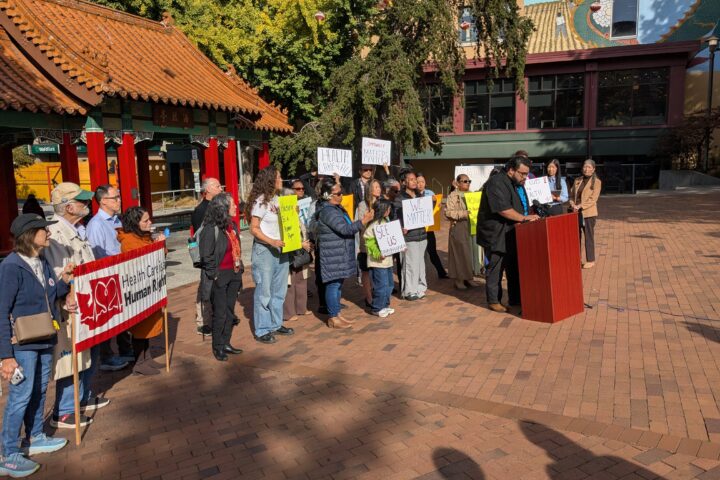
After my experience navigating the system here, I decided to help the movement to bring universal healthcare to Washington State, so I became a volunteer with Whole Washington.
The idea is that if one state manages to prove that universal healthcare is possible and works, it will start a domino effect with other states following. This is what happened in Canada, where the Government of Saskatchewan passed legislation to bring universal healthcare to the province, and eventually the others followed.
There are lots of questions about how we’ll bring universal healthcare to Washington State:
- What will the coverage be?
- How would it fit into our current healthcare system?
- What will it cost families?
- How will it be funded?
These are questions that other countries have faced, and overcome. While no system is perfect, a system that values each human as worthy and deserving of healthcare is a system that has the value of human dignity at its core.
For answers to the above questions and more, watch this three-minute video, then pledge to sign, volunteer, and spread the word by posting flyers!