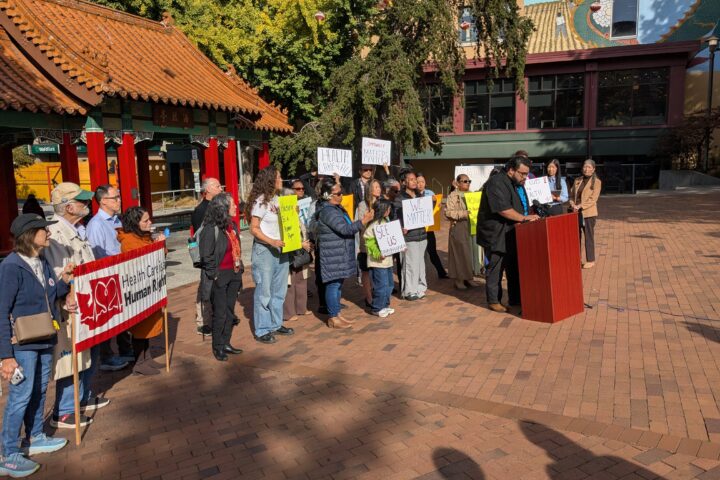
As I mentioned in my last post (How Italians see the US healthcare system), I recently moved to Washington State after living for 25 years in Rome, Italy. I started volunteering for Whole Washington in August.
Since my employer-sponsored healthcare doesn’t include dental insurance, I decided to sign up through the state marketplace exchange. The monthly premium is $18 for my coverage and includes basic dental such as check-ups and cleanings.
I scheduled an appointment to establish care with a local dentist. I also mentioned my concern about nighttime teeth grinding I’ve been experiencing.
When I was living in Italy, I paid out of pocket for my dental care. Although private insurance is available and it’s reasonably priced, I didn’t get it because I only needed preventative care. Out-of-pocket costs were feasible for a twice-a-year dental cleaning (about 80 euros, or roughly $95, per cleaning).
In Italy, the national health system covers a very limited range of dental procedures, mainly for emergencies, so I knew I should always ask the price if there was going to be something outside the range of normal preventative care.
After living 25 years in a system that offers universal healthcare, I’ve come to realize I have no cultural awareness or practical knowledge around insurance billing procedures. I’ve done my best to study the ins and outs of the US healthcare/insurance system and my particular coverage, but when I went to my dental exam for a routine check-up, it didn’t occur to me to inquire about what would be covered during the exam and what wouldn’t. In Italy, for example, the dental office I went to didn’t do lab work or x-rays. They didn’t have any of those machines in the office. You had to go to a private diagnostic clinic to have all that done. Costs were relatively reasonable so it wasn’t ever much of a problem. I never paid more than 150 euros for any dental x-rays for my children.
When I had my first dental check-up here in the US, I was whisked through a series of exams and x-rays I hadn’t had in years, some since I was a child, such as multiple bitewings. The technician tried to perform an exam to take pictures of the inside of my mouth with a small camera that looked like a penlight, but was unable to do so because the computer wasn’t cooperating. I was ushered to stand inside a giant machine for a quietly whirring panoramic x-ray all around my head. I was told to swish a clear liquid for 30 seconds for a saliva test.
I just went along with all of this, because after all, I’m a new patient and therefore, this must all be part of a routine new patient preventative exam.
When I left, I asked if I needed to pay anything and the office staff told me cheerfully, “Nope, you’re all set!” So I figured that was that.
How wrong I was
I’m sure what I’m about to write is not going to surprise any of you who’ve lived in the US healthcare system for any amount of time. I’m sure you probably already guessed what I was going to say from the very first sentence. And yet, I still want to tell you. Why? I guess I’m just looking for some solidarity, somehow. I guess I want to feel less alone in a system that feels—well, foreign.
This morning I got an email that said there was a “new statement” from the dental insurance company. I didn’t think it mattered, since I walked out breezily thinking “insurance has got this all covered,” but I figured I’d open it anyways. Why not? The statement was cryptically titled “Explanation of Benefits.”
Here, see for yourself:
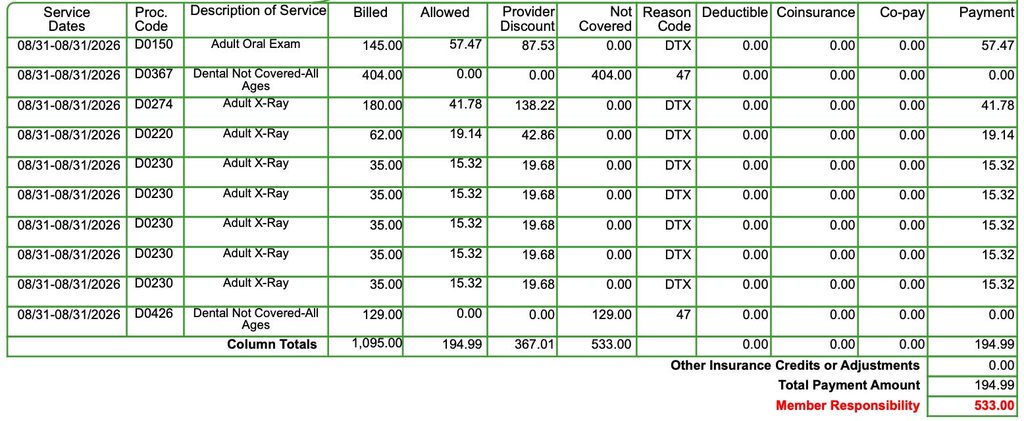
When I looked at this, it felt like a gut punch. I’m a single mom raising twin 16-year-olds in a new country. I came here with literally three suitcases. I have a few pieces of furniture, cast-offs or on loan from family, and a monthly grocery bill that’s nearly double what I spent in Rome. My bank account is beyond stretched right now. And I’m looking at this and going: what?! I owe $533?!?
So then I start trying to navigate why. All it says is “dental not covered-all ages” and I’m like, what in the actual? What the heck did they do that cost $404 and $129?
Cue the code key that I discover at the bottom of the EOB (I’m learning the lingo now):
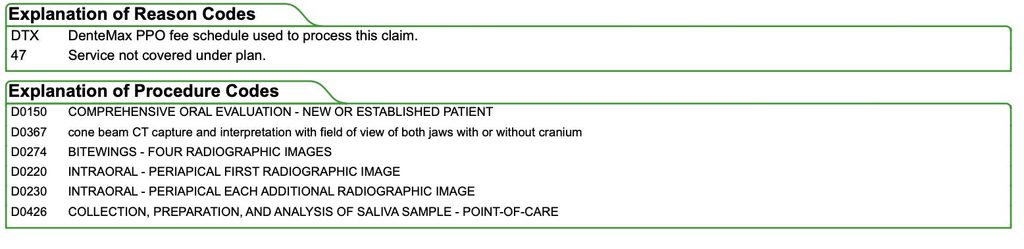
Here’s the thing: no one mentioned to me as they whisked me through the multiple machines that “by the way we’re about to do two procedures today that cost over $500 and by the way have you checked if they’re covered by your insurance because if not maybe we can talk about whether it’s an essential procedure today or not.” Yeah, no.
I’m only just learning how to navigate this system, and this all comes as a complete shock to me. Maybe you’ll see me as naive, or uninformed, or both. Fair enough.
Frankly though, I’ll tell you how I feel: I feel completely swindled. And I’m afraid this is likely just the beginning.

The path to universal healthcare in WA
At Whole Washington, we’re a relatively small group of dedicated volunteers who firmly believe that achieving universal healthcare in Washington State is really, truly possible.
Whole Washington has a bill that will be reintroduced in the 2027 legislative session (called The Washington Health Trust, if you’d like to know more), that would give you, as a Washingtonian, universal healthcare coverage from head to toe.
Universal Access: Every resident in Washington would receive comprehensive health coverage regardless of income, race, or immigration status. [1]
Free at the Point of Service: Most residents would pay no premiums, deductibles, or copayments when visiting a doctor or receiving medical care. [1]
Comprehensive Benefits: Essential health services are covered, including primary care, hospital visits, prescription drugs, mental health, vision, and dental. [1, 2]
Long-Term Care: The plan includes hospice, end-of-life care, and long-term care that meets or exceeds standard Medicaid levels. [1]
Imagine a world where you never have to dread that sinking feeling of unexpected bills for healthcare procedures you might not have even known you were going to be charged for.
We can win. You can help.
If you’re a Washington State voter, pledge to sign (it takes less than 400,000 signatures to get universal healthcare on the ballot, which is an alternative path to passing).
Here’s what else you can do, right now, to help make universal healthcare a reality in Washington State:
- Sign up for our Whole Washington newsletter
- Follow us on social media (links to all our platforms here)
- Donate
- Join one of our teams! We meet weekly on Zoom:
- Ballot initiative (Wednesdays 5:30-6:30 pm)
- Communications (Tuesdays 10-11:30 am)
- Data and tech (Fridays 10:30-11:30 am)
- Fundraising (Mondays 12-1 pm)
- Legislative and Commission Advocacy (Thursdays 11 am-12 pm)
- Social media (Wednesdays 12-1 pm)
- Weekly phonebank (Sundays 2-4 pm)